In this guide
One day is enough for Mathura and Vrindavan if — and only if — the day is built around the temple closure rather than in spite of it. Most one-day plans you will find online list eight or nine stops and quietly assume the temples are open continuously. They are not, and that is why those plans fall apart by early afternoon.
What follows is the shape we actually drive, with honest timings and an explicit note on where it breaks.
What one day realistically covers
Starting from Delhi, the drive alone is around 180 km each way — three and a half to four and a half hours in each direction on the Yamuna Expressway, depending on where in Delhi you start and when you leave. That is up to nine hours of the day spent in the car before you have seen anything.
So a one-day trip from Delhi means an early start and a late return, and it comfortably holds four to six stops — not nine. Staying overnight in Mathura or Vrindavan changes the arithmetic entirely and is the better choice if you can spare the night.
The hour-by-hour plan
| Time | Where | Notes |
|---|---|---|
| 5:30 – 6:00 AM | Depart Delhi | Earlier is genuinely better. The Expressway is clear and you buy yourself the entire morning session. |
| 9:30 – 10:00 AM | Shri Krishna Janmasthan, Mathura | Security is strict; leave phones, bags and leather in the car. Allow more time than you expect for the queue. |
| 11:00 AM | Dwarkadhish Temple, Mathura | A short drive from the Janmasthan. Vishram Ghat is close by if the morning is running to time. |
| 12:00 – 12:30 PM | Temples begin closing | This is the wall. Stop trying to add darshan here. |
| 12:30 – 2:00 PM | Lunch, and the drive to Vrindavan | The 12–14 km between the towns takes 30–45 minutes. The closure pays for it at no cost to your itinerary. |
| 2:00 – 4:00 PM | Prem Mandir gardens, or rest | Wide, level, shaded paths. The one comfortable place to spend the closure on your feet. |
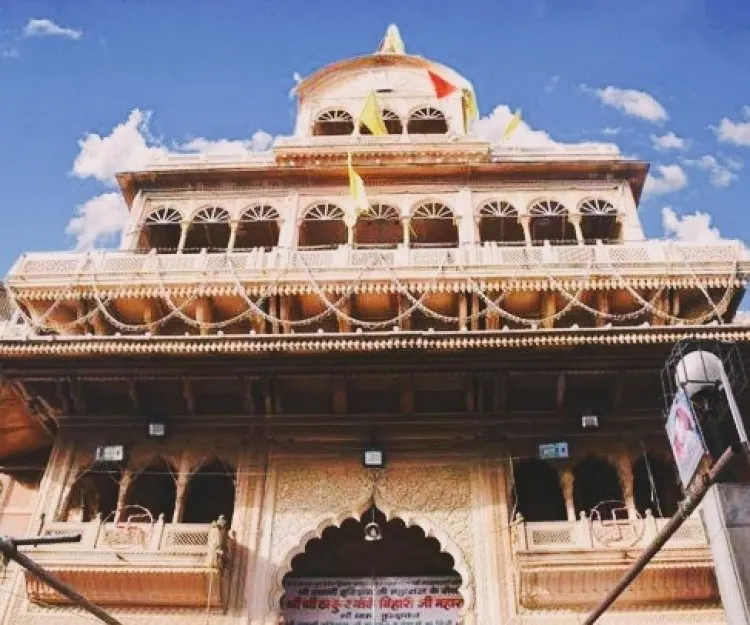
| 4:30 – 5:30 PM | Temples reopen — Banke Bihari | Go here first when the evening session opens; it is the busiest and the queue only grows. |
| 6:30 PM | ISKCON, Radha Raman or Nidhivan | Pick by interest. Nidhivan must be done before dark. |
| 7:30 PM | Prem Mandir, lit | The light display after dark. The right note to end on. |
| 8:30 PM | Depart for Delhi | Back around midnight. Plan for it rather than being surprised by it. |
Where this plan breaks
- A late start. Leaving Delhi at 8 AM instead of 5:30 costs you the entire morning darshan session, not two hours — you arrive as the temples are closing.
- The Janmasthan queue. Security is thorough and the queue is unpredictable. It can take far longer than planned, and it is the stop most likely to eat the morning.
- Underestimating the walk. No car reaches Banke Bihari. The last stretch is on foot through a crowded bazaar, and it is longer than people expect.
- Festival days. On Janmashtami or during Holi this itinerary is not merely optimistic, it is fiction. Those days need their own plan.
What to drop first
When the morning runs late — and it often does — cut in this order. Vishram Ghat goes first; it is lovely and it is not why you came. Then Gokul, which is a separate drive and deserves its own half-day rather than a rushed thirty minutes. Then ISKCON, which is the stop most easily seen on another trip.
What should survive every cut: Banke Bihari, the Janmasthan, and Prem Mandir after dark. Those three are the day.
If you would rather not run the clock yourself, this is exactly what our drivers do — they know which temple to reach first when the evening session opens, and they check the day's timings before setting out.